
How Safe Are Your Public Places?
Safety in Our Crowded Places
With an ever-increasing occurrence of violence and a turbulent world, we need to consider how safe our public places are from terrorism and armed offenders — and whether that assessment should also extend to natural disasters.
Australia has historically been relatively safe from active shooter events, underpinned by our strict gun ownership laws. The Bondi Junction terrorist attack has since served as a stark reminder that we are not immune. It raises a critical question: have we adequately prepared for these types of incidents?
Have you considered what threats and vulnerabilities your business could face from armed offenders or a terrorist attack?
If you own or operate what is considered a “crowded” or “public place”, you carry a primary responsibility to protect the site and, by extension, the workers and public who visit it. This is a core element of your duty of care obligations under workplace health and safety legislation.
The 5 P’s of Emergency Preparedness
Prior Preparation Prevents Poor Performance
Your approach to managing your site should be proportionate to your risk and threat assessment, completed before implementing any strategies. It should be nationally consistent and, where possible, preserve the public’s enjoyment and use of your space.
What Constitutes a Public or Crowded Place?
Australia’s Strategy for Protecting Crowded Places from Terrorism (2017) defines crowded places as:
“Crowded places are locations which are easily accessible by large numbers of people on a predictable basis. Crowded places include, but are not limited to, sports stadia, transport infrastructure, shopping centres, pubs, clubs, hotels, places of worship, tourist attractions, movie theatres, and civic spaces. Crowded places do not have to be buildings and can include open spaces such as parks and pedestrian malls. A crowded place will not necessarily be crowded at all times: crowd densities may vary between day and night, by season, and may be temporary, as in the case of sporting events, festivals, or one-off events.”
— Australian Institute for Disaster Resilience, Crowded Places Handbook, p. 19
Where to Find Guidance
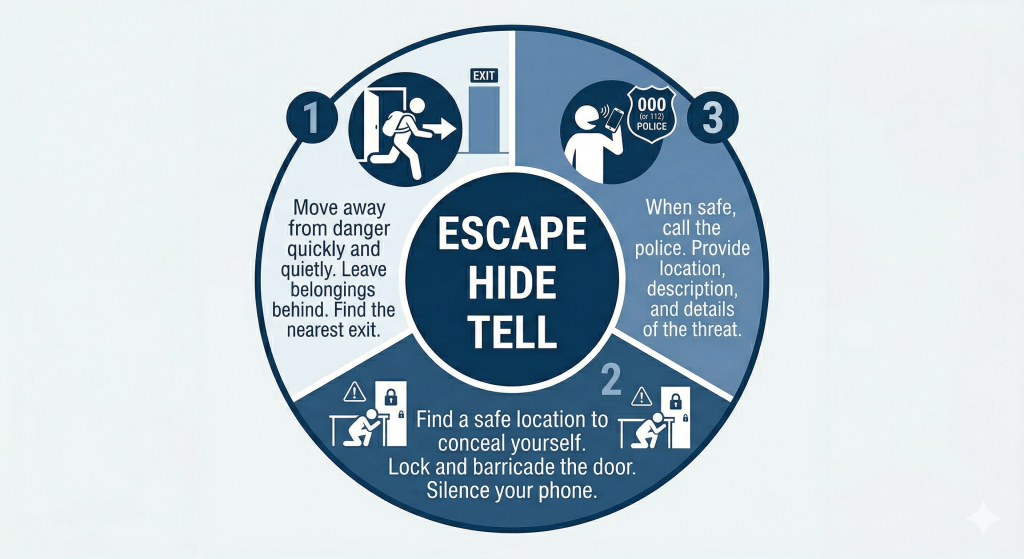
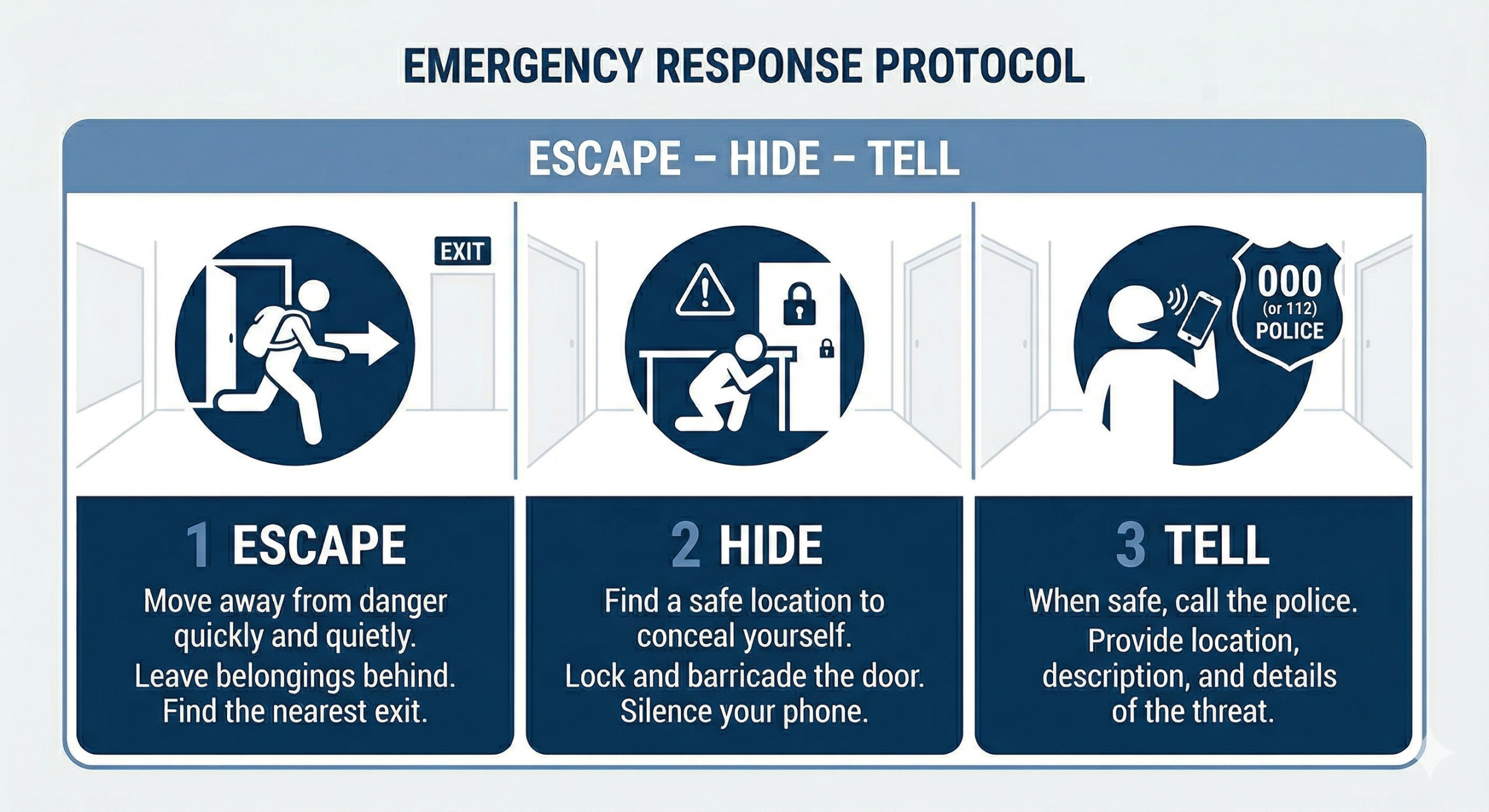
The Australian National Security website provides extensive resources on protecting public places, including the “ESCAPE – HIDE – TELL” protocol for active armed offender incidents. The Australian Institute for Disaster Resilience Knowledge Hub also holds a comprehensive library covering all aspects of disaster management and resilience.
If you are responsible for managing a crowded place — such as a shopping centre, school, or event venue — it is prudent to ensure your standard operating procedures include strategies grounded in these national standards.
How Australian Fire Protection Can Help
Australian Fire Protection regularly delivers training in emergency preparedness, including active armed offender response for crowded places. Our team includes professionals working and studying at a postgraduate level in counter-terrorism and operational medicine.
- Active Armed Offender Response Training
- Crowded Places Risk and Threat Assessments
- Emergency Management Planning (EMP)
- WHS Compliance and Duty of Care Advisory
If you are responsible for managing a crowded place — such as a shopping centre, school, or event venue — it is prudent to ensure your standard operating procedures include strategies grounded in these national standards.
How Australian Fire Protection Can Help
Australian Fire Protection regularly delivers training in emergency preparedness, including active armed offender response for crowded places. Our team includes professionals working and studying at a postgraduate level in counter-terrorism and operational medicine.
- Active Armed Offender Response Training
- Crowded Places Risk and Threat Assessments
- Emergency Management Planning (EMP)
- WHS Compliance and Duty of Care Advisory